

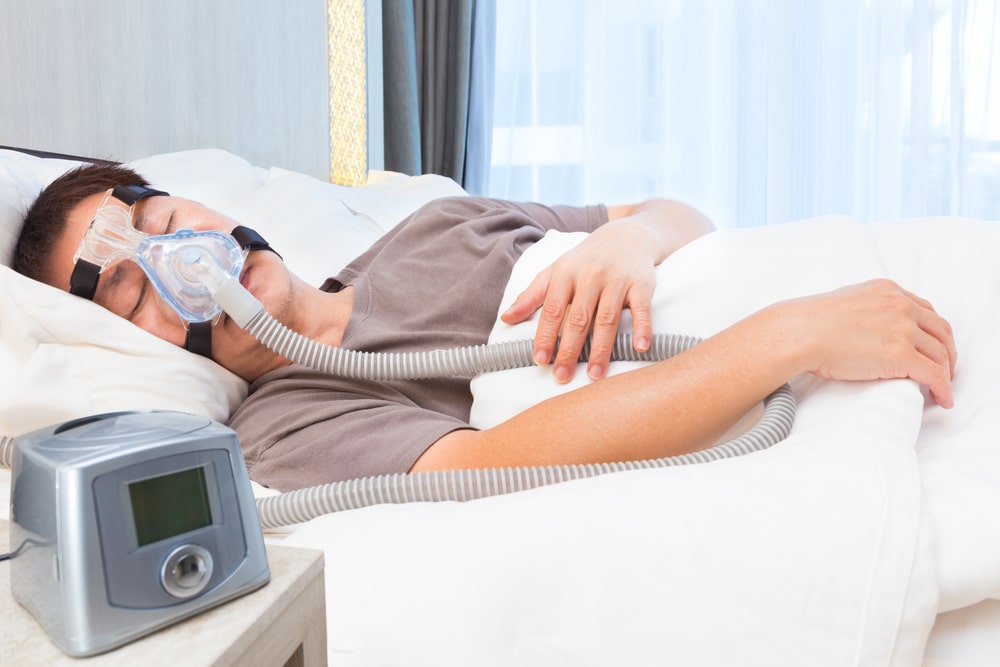
Choosing a CPAP or APAP machine in Montreal: where to start
Being diagnosed with sleep apnea is one thing. Choosing the right machine to treat it is another – and the choice you make matters more than most people realize. The wrong device can leave you abandoning therapy within weeks; the right one becomes nearly invisible in your routine. According to the Canadian Sleep Society, untreated sleep apnea affects roughly one in four Canadian adults to some degree, and adherence to CPAP therapy in the first 90 days is the single strongest predictor of long-term success.
This guide is built for people in Montreal and across Quebec who are about to buy, rent, or finance their first CPAP or APAP machine – or replace one that no longer fits their life. We cover the difference between CPAP, APAP and BiPAP, the five criteria that actually matter when comparing models, the top machines available in Montreal in 2026, how to decide between buying and renting, and where to get fitted locally without playing telephone tag with US importers.
Not in the mood to read all of this?
Here are our quick picks by user profile – tap the link to see the device on our shop:
- You want the most popular, well-supported all-rounder: the ResMed AirSense 11 AutoSet with HumidAir & ClimateLineAir. APAP function included.
- You want a quieter European-engineered option, often a smarter price: the Lowenstein Prisma SMART CPAP/APAP.
- You travel a lot: the ResMed AirMini AutoSet – one of the smallest auto-adjusting CPAPs on the market.
- You also need supplemental oxygen: see the Inogen Rove 6 Portable Oxygen Concentrator.
CPAP vs APAP vs BiPAP: which one do you actually need?
These three letters get tossed around as if they were brands, but they describe three different ways of delivering pressurized air. Picking the wrong category is the most common – and most expensive – mistake first-time buyers make.
CPAP: one steady pressure, all night
A CPAP (Continuous Positive Airway Pressure) machine delivers a single, fixed pressure prescribed by your sleep physician. It is the original therapy for obstructive sleep apnea and remains the most clinically validated. CPAPs are typically the most affordable, the simplest to operate, and the easiest to insure. The trade-off: if your apnea severity varies during the night (most do, somewhat), the fixed pressure can feel too high when you do not need it, and too low when you do.
APAP: pressure that adjusts in real time
An APAP (Automatic Positive Airway Pressure) machine constantly monitors your breathing and adjusts the pressure within a range your physician sets. Sleeping on your back? It nudges the pressure up. Side sleeping with fewer events? It backs off. The result is more comfortable therapy for most users, especially those with positional apnea or REM-related events. Most modern machines sold today are actually CPAP/APAP hybrids – they can run in either mode based on the prescription, which is why you will see model names like “AutoSet” or “Auto CPAP”. Search volume for “apap machine” on Google in our region has been rising for two years and is now meaningfully above pure “cpap machine” searches in some segments.
BiPAP: two pressures, for more complex cases
A BiPAP (Bi-level Positive Airway Pressure) machine delivers one pressure when you inhale and a lower one when you exhale. It is prescribed for central or mixed sleep apnea, complex obstructive cases that fail high CPAP pressures, and certain respiratory conditions like COPD overlap syndrome. BiPAPs are not a comfort upgrade for everyone – they require a specific prescription and are usually more expensive. The flagship in this category at RespiArt is the ResMed AirCurve 11 ASV.
The five criteria that actually matter when comparing machines
Marketing brochures list 20 features. Three or four actually change your daily experience. Here are the ones we ask every patient to evaluate before signing off on a machine.
1. Noise level (in real-world conditions)
Manufacturers publish noise figures around 26 to 30 decibels – quieter than a whisper, in theory. Reality depends on the room, the tubing, and most of all the mask seal. A mask with a small leak can push the perceived noise above 40 dB, the level where it disrupts a partner’s sleep. Look for a measured noise figure under 28 dB, and choose a mask designed for your sleeping position to keep it there.
2. Automatic pressure adjustment (APAP function)
If your prescription allows it, an APAP-capable machine costs only slightly more than a fixed-pressure CPAP but adapts to nightly variability. For most patients diagnosed in Montreal sleep labs in the last three years, the prescription is written as a pressure range precisely so an APAP can do its job. If you are unsure, ask your respiratory therapist or sleep physician to confirm.
3. Integrated heated humidification
Quebec winters are dry, and forced air with no humidity quickly produces nasal congestion, sore throats and rainout (water condensation in the hose). A built-in heated humidifier and a heated tube are no longer optional in our climate – they are baseline. Every machine we stock includes both options or is sold as a package with them.
4. Onboard data and connectivity
Modern machines record nightly usage hours, residual apnea events (AHI), mask leak and pressure data. This matters for two reasons: your physician adjusts therapy based on this data, and your insurer often requires it as proof of compliance to reimburse. Look for machines with built-in cellular or Wi-Fi data sharing – it saves you from carrying SD cards to follow-up visits.
5. Travel size and power flexibility
If you fly more than three or four times a year, a compact travel CPAP is worth considering as a second device. Travel CPAPs (like the ResMed AirMini) are FAA-approved for in-flight use, weigh under 300 grams, and run on standard wall power or compatible battery banks. For everyday use at home, a standard-size machine is more comfortable and easier to maintain.
Best CPAP and APAP machines available in Montreal in 2026
The table below compares the four machines we most often recommend to first-time and replacement buyers. All four are in stock at RespiArt, all four meet Health Canada requirements, and all four come with an authorized RespiArt service warranty.
| Model | Type | Noise (dB) | Weight | Best for | Where to see it |
|---|---|---|---|---|---|
| ResMed AirSense 11 AutoSet | CPAP / APAP | 27 | 1.2 kg | The all-rounder. Easiest to insure, biggest support ecosystem in Canada. | See product |
| Lowenstein Prisma SMART | CPAP / APAP | 26.5 | 1.5 kg | Quieter at low pressures, German engineering, often better priced than US brands. | See product |
| Philips DreamStation 2 Auto CPAP Advanced | CPAP / APAP | 27.5 | 1.3 kg | Compact, touchscreen, strong humidifier integration. A solid third option. | See product |
| ResMed AirMini AutoSet | APAP (travel) | 30 | 0.3 kg | Frequent travelers. Not a daily-use replacement – a complement. | See product |
For a wider view of what is in stock at any given time, browse the full CPAP and BiPAP machines category on our shop.
Choosing by profile: which machine for which person
Side sleeper
If you sleep on your side most of the night, the machine matters less than the mask. Almost any modern APAP works well; the key is pairing it with a nasal pillow mask (like the AirFit P10) or a hybrid mask that does not press into the pillow. The Lowenstein Prisma SMART is a popular choice in this segment because of its low ramp pressure.
First-time user, anxious about the device
The ResMed AirSense 11 has the most polished onboarding experience: a touchscreen walkthrough, a smartphone app (myAir) that gamifies adherence, and the largest community of Canadian users to ask questions to. It is also the easiest machine for a Quebec respiratory therapist to support remotely if you have issues.
Frequent traveler or shift worker
A dedicated travel CPAP changes your life. The ResMed AirMini fits in a coat pocket, runs off a USB-C battery bank, and is approved for use on every major airline. For someone who travels for work two weeks a month, owning both a standard home machine and an AirMini is a more sustainable setup than trying to lug a full unit through security.
Severe apnea or central events
If your sleep study showed a high AHI (above 30) with central or mixed events, ask your physician about a BiPAP rather than a CPAP. The ResMed AirCurve 11 ASV is the device most often prescribed in this category in Quebec. It requires a specific prescription and is not interchangeable with a standard APAP.
You also need supplemental oxygen during the day
Many sleep apnea patients with COPD overlap also use a portable oxygen concentrator during waking hours. The Inogen Rove 6 Portable Oxygen Concentrator is the most popular standalone unit at RespiArt and pairs cleanly with any of the CPAP machines listed above.
Buy, rent or finance: which makes sense in Quebec
A new CPAP machine in Montreal typically costs between $1,300 and $2,800 CAD depending on the model, the included mask, and accessories. That is a meaningful purchase, and our patients often ask which acquisition route fits their situation. Here is the honest comparison.
| Option | Typical cost | Best when | Watch out for |
|---|---|---|---|
| Buy outright | $1,300 – $2,800 one time | You have a confirmed long-term prescription and your insurance reimburses purchases. | Some private plans only reimburse 80% of the device; check first. |
| Rent monthly | $95 – $150 / month | You are in the 90-day trial period and not 100% sure you will tolerate therapy. | Renting longer than 18 months usually exceeds purchase price. |
| Rent-to-own | $110 – $160 / month, applied to purchase | You want to spread the cost and test the device before committing. | Read the contract: some plans cap the credit applied to the final purchase. |
| Insurance-financed | Co-pay only | You have private insurance through work (Sun Life, Manulife, Desjardins, etc.) that fully covers DME. | The RAMQ does not reimburse CPAP machines for most adults; private plans do. |
Most patients who are newly diagnosed start with rent-to-own. If after the first 90 days adherence is solid (4+ hours of use per night, AHI under 5), the purchase typically saves money compared to long-term rental. To request a rental quote in French or English, use our CPAP rental form.
Where to get fitted for a CPAP in Montreal
RespiArt is the largest independent respiratory equipment specialist on the Island of Montreal, with a flagship store on rue Beaubien and service points covering the West Island and the East Island. We stock all four machines listed above in person, our certified respiratory therapists handle mask fittings on appointment, and we accept prescriptions issued by any Quebec sleep physician.
For specific service zones, see our dedicated pages:
- West Island sleep apnea clinic and CPAP solutions
- East Island sleep apnea clinic and CPAP / oxygen concentrator solutions
Booking a fitting in advance is recommended – mask trials take 45 to 60 minutes, and trying three or four masks in a single visit is normal for first-time users.
Frequently asked questions
How much does a CPAP machine cost in Quebec?
Between $1,300 and $2,800 CAD for the device alone in 2026, depending on the model and included accessories. Add $200 to $500 for a high-quality mask. Most private insurance plans cover the majority of the cost; the RAMQ does not reimburse CPAP for adults outside of specific programs.
Does the RAMQ cover sleep apnea machines?
For most adults, no. The RAMQ does not reimburse CPAP devices unless you qualify for a specific support program (typically tied to disability or certain medical conditions). Private insurance is the primary funding route in Quebec.
What is the difference between CPAP and APAP exactly?
A CPAP delivers one fixed pressure all night. An APAP delivers a variable pressure within a range set by your physician, adjusting in real time based on your breathing. Most modern machines on the market today can run in either mode – the prescription decides.
How long does a CPAP machine last?
The motor typically lasts 5 to 7 years. The mask cushion should be replaced every 1 to 3 months, the mask frame every 6 months, the tube every 6 to 12 months, and the filter every 1 to 6 months depending on the model. Insurers usually reimburse a full machine replacement every 5 years.
Can I bring my CPAP machine on a plane?
Yes – all CPAPs are approved as medical devices and do not count toward your carry-on limit on Canadian airlines. For in-flight use during long-haul flights, you need an FAA-approved unit (like the ResMed AirMini) and you should notify the airline 48 hours in advance.
Do I need a prescription to buy a CPAP in Canada?
Yes. Health Canada classifies CPAP as a Class II medical device, which requires a prescription from a physician. RespiArt verifies every prescription before delivery. If your prescription is more than 24 months old, your physician may need to update it.
Ready to choose your CPAP machine?
There are three ways to move forward today:
- Browse the CPAP and APAP catalogue: see what is in stock right now in our CPAP/BiPAP shop category.
- Book a fitting appointment: the most efficient way to find the right machine and mask combination is in person. Contact RespiArt to schedule.
- Try before you buy: request a rental quote via our online rental form and test the machine for 30 to 90 days before deciding to purchase.
If you would prefer to speak with a respiratory therapist directly, call us at our Montreal location and ask for an appointment with the CPAP team. There is no consultation fee, and most insurance plans cover both the assessment and the equipment.

Leave A Comment